A BRIEF HISTORY OF WEE FOREST FOLK®
Every day someone walks into a gift shop and notices a display of adorable figurines depicting mice and other animals doing very human things in a woodland setting and falls instantly in love. Perhaps those buyers engage shop owners in conversation about the origins of those figurines. Perhaps not. But ultimately most new collectors begin searching for ways to learn more about Wee Forest Folk and, the more they learn, the more they fall in love with those sweet faces doing fun things. And the more they learn, the more they realize how extraordinary those figurines really are.
Wee Forest Folk are made by hand in Carlisle, Massachusetts. They are created by a family of artists who trace the roots of their art back to the late 60s/early 70s, when the very first Wee Forest Folk© were made in the kitchen of a large farmhouse in historic Concord, Massachusetts by the family matriarch, Annette Petersen. In a time when gift shops are closing and some of the most impressive artists of the last 50 years have either left the business or sold the rights to mass produce their art overseas, Wee Forest Folk stands nearly alone as a first-rate, family owned and run, cottage industry.
The "machines" used to create and finish the pieces are human-powered: Petersen family members who sculpt the prototypes by hand; a mold maker (Willy Petersen) who prepares the molds for firing; sanders who carefully smooth the edges of each piece when they emerge from the molds; painters who painstakingly apply every detail by hand with impossibly detailed instructions using impossibly small paint brushes; airbrushers who add the cheek paint, mousey hair, pink ears and the matte or glossy finishes; finishers who add bases and other elements such as ribbons and springs and straight pins and decals and flowerpots; the tailers who cut and fasten the appropriate length leather tails, and fixers who inspect every piece before they declare them ready to leave the WFF factory (aka the Mouse Factory). Every detail of the process is initiated and supervised by the Petersens themselves: paint colors, size and type of bases, composition of scenes, types of accessories, and even types of glaze. There are no machines and no gas-powered assembly lines, just a process that ensures every piece is handmade and as close to perfection as possible.
But how did Annette Petersen get her inspiration for Wee Forest Folk, you ask?
The impetus for Wee Forest Folk as a business began much earlier than the creation of Annette’s first "mouse" sculpted from bread dough. It started when Annette decided to apply her creative energy to art projects to share with others. With three children to care for and a household to manage, Annette Petersen needed a channel for expression of one of her earliest passions: art. She was a painter, a designer, a sculptor, and mother of three young children in the 1960s. She wanted to contribute to the family financially and she knew that could be done by giving voice to her many talents.
Annette saw art in many places: on the beach, during long walks in the woods behind her home, on the banks of the famous Concord River, and in the people and woodland creatures that surrounded her daily life. She was a keen observer and she translated her thoughts about the world around her into the small creatures we now refer to as Wee Forest Folk.
Annette was also an early conservationist and historian. She placed a high value on caring for the environment and on the historical significance of her family hometown, Concord, Massachusetts.
Some number of her early Wee Forest Folk pieces (see, for example the Concordians, Fifers, Drummers, Minute Mice, and Redcoat Mice in the MM-01 to MM-12 series) were sculpted to honor the history of Concord and the Revolutionary War, and Annette even offered historically-based WFF pieces to local landmarks to support their fundraising efforts when they became museums. A group of pieces based on Jo's pet rat from Little Women was offered to Louisa May Alcott’s Orchard House (AH-01 through AH-09). The series began with Scrabble (transformed from a rat to a mouse) sitting behind a book titled Life in the Attic and morphed into Scrabble sitting on a chest with his son, a Grandma arriving for a visit, and even an appearance by Missy March, the youngest of the March sisters. Likewise, WFF likenesses of former residents of the Old Manse Museum (Nathaniel Hawthorne, Ezra Ripley, and Sarah Ripley) were provided to help fundraising efforts for that museum.
|
|
|
|
| Ezra Ripley | Sarah Ripley | Missy March | Scrabble |
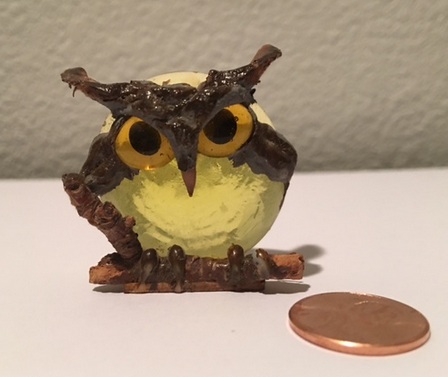
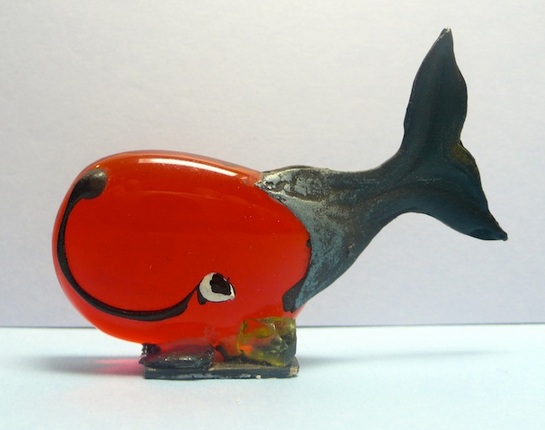
The Wee Forest Folk company had its unofficial start in the late 60s and early 70s when Annette began creating "folk" from items she found and/or repurposed: glass owl "suncatchers" from colored glass rounds perched on slices of tree branches or rocks and decorated with big painted-on eyes, frogs from green glass "blobs" perched on rocks and painted with frog faces, plus turtles, cats, owls, snails, whales, insects, and even a pumpkin (see the section in this Master List titled Suncatchers, SUN-1 to SUN-8, for more examples of these early WFF pieces). Wee Forest Folk as a business based on sculpted woodland creatures is reported to have truly begun when she sculpted her first mouse from bread dough and adorned it with eyes and a largish pipe-cleaner tail. According to the Wee Forest Folk website, the official starting date for the Wee Forest Folk company was 1972.
 |
 |
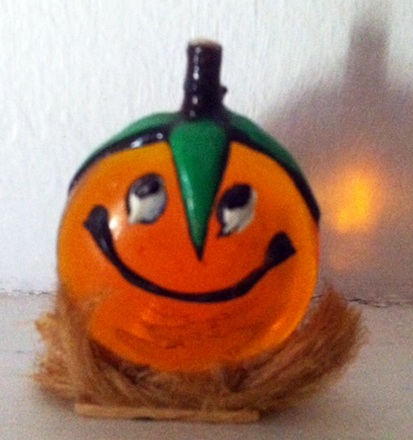 |
| Suncatcher Owl | Suncatcher Whale | Suncatcher Pumpkin |
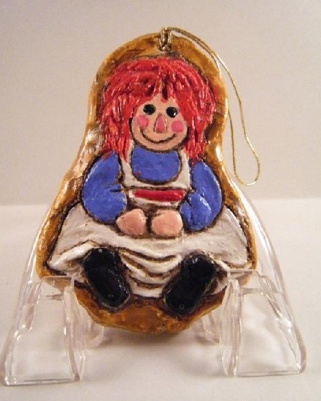
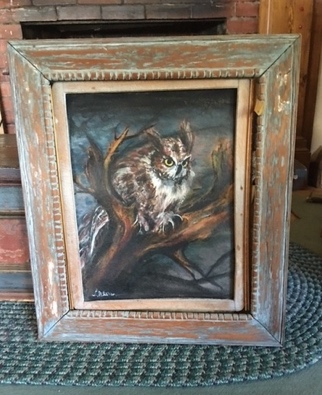
During Annette's creative journey she painted (mostly owls), hand-built "Cookie Ornaments" (CKY section in the Master List), and even built a huge (by today’s standards) dollhouse and filled it with dollhouse-sized furnishings. That dollhouse stood for decades in a smallish space off the kitchen in Annette’s house and it’s likely that Annette’s paintings decorated interior walls for decades as well. Annette didn’t just create, she sold her creations and she lived with them in her own home. She was an inspiration for both William and Donna, the children who followed her into the family company.
 |
 |
|
| Raggedy Ann Cookie Ornament | Owl Painting |
Annette discovered she was destined to be a career artist and she tried a bit of everything while looking for the "thing" that would give her the most joy: small mouse figurines in dresses and overalls doing everyday things with their families and friends, both humans and animals.
Annette’s son, Willy Petersen, graduated from the University of Massachusetts in 1976 with a Bachelor of Science degree in Pre-Dentistry and a Concentration in Art. No doubt being a science major contributed to the many ways he applied his knowledge of science to his innovations in the Mouse Factory. Annette's daughter, Donna Petersen, helped their mother with a variety of tasks while in school and joined their Mom’s business officially when she completed a Bachelor of Science degree in Biology from Clark University in 1975. Both Donna and Willy inherited Annette’s creativity and both found their niches in Annette’s new company as sculptors, collaborators, creators and art/science engineers. The Mouse Factory was part artistic creation, part innovation, and part conservation.
With Annette, Donna, and Willy all creating WFF pieces there were bound to be differences among the three of them, as well as unique characteristics of the mice based on who sculpted them. And the addition of Bonnie Petersen to this group (Bonnie is one of Willy and Jenny's daughters) and WFF pieces created by Jenny Petersen (Willy’s wife and a long-time WFF painter before joining the Petersen family) resulted in yet a fourth and fifth set of WFF pieces. Donna's daughter, Virginia, added to the process by painting backdrops that helped to create early WFF "scenes".
Clearly Wee Forest Folk was meant to be a family collaboration.
Creating Wee Forest Folk has had some hard-and-fast rules over the years, but there was always ample room for and appreciation of individual differences. A fun fact is that the one staple of WFF design for a long time has been the eyes. Newly hired painters often had to train for weeks to get the mouse eyes "just right". The Petersens even invented an "eye wheel" that could be used to teach new painters to paint eyes exactly as Annette wanted them to be. It’s easy to see in one’s own collection just how many WFF mice have the same intense black eyes. Beyond the eyes, however, distinctions among the Petersen sculptures are subtle but nevertheless evident.
Annette's Sculptures
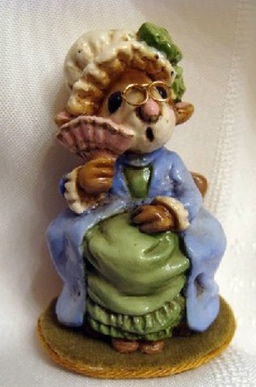
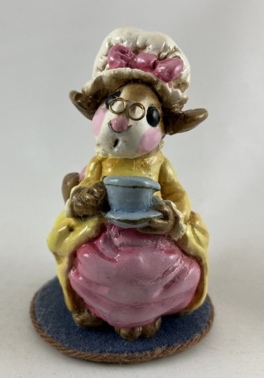
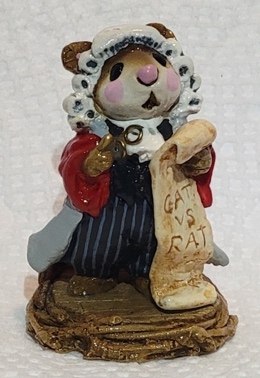
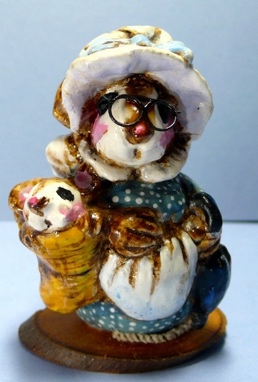
Annette's mice are DOING things. Looking at her sculptures you see more than mouse statues; you feel the implied story in the pieces: having tea, watering flowers, taking care of others, and generally spreading cheer with their sweet facial expressions. And that story tends to make collectors smile.
 |
 |
 |
 |
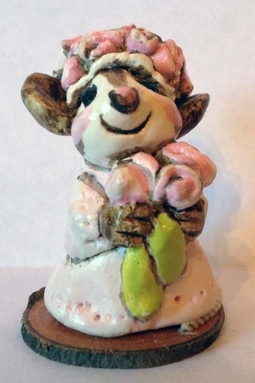 |
| Fan Mouse | Tea Mouse | Barrister Mouse | Mama Mouse w/Baby | Bride Mouse |
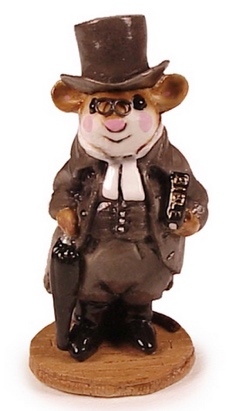
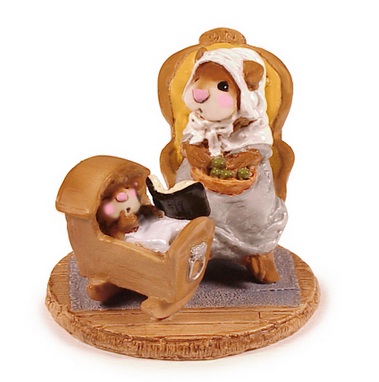
Annette's mice are a bit rounder than other mice and many of the girl/lady mice she sculpted wear dresses with long full skirts with covered feet or tiny brown feet peeking out from under the skirt. Her early mice (pictured above) had similarly rounded faces, almost always wore fancy old-fashioned hats, and frequently wore wire-rimmed glasses. An oval facial expression is common among them, as is the Bride's smile.
Most of these pieces were painted in more than one color option, and there were slight differences in the clothing and accessories. Sometimes the names for these numbered pieces changed but the numbers remained the same. For example, Mama Mouse with Baby entered the line as M-018 Mama Mouse with Baby but shared that number with a nearly identical mouse called Big Mama Mouse with Baby. Don’t be alarmed if identifying these older mice feels somewhat challenging. The cataloging of the mice was just getting underway in the 1970s.
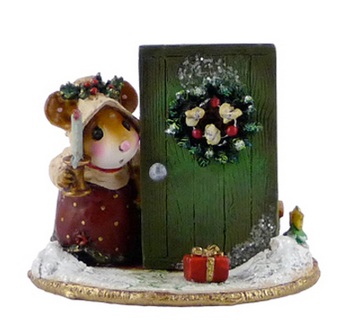
Whether attired in dresses with an elegant overskirt over a ruffled underskirt or dressed in a neon pink wedding dress, Annette’s mice have often been portrayed as formal and elegant. The two pieces below not only illustrate elegance of fashion, they also are two-sided and elaborately decorated on both sides. They are best displayed on tiny rotating pedestals and even come with their own decorated boxes.
 |
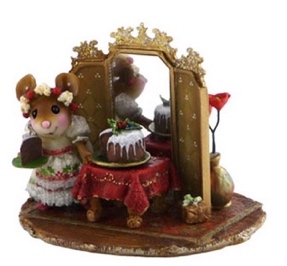 |
| Oh My, A Christmas Present! | The Elegant Hostess |
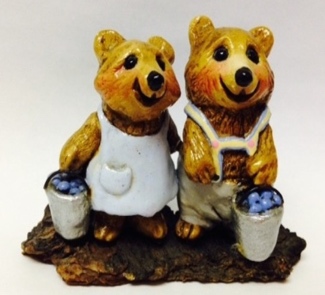
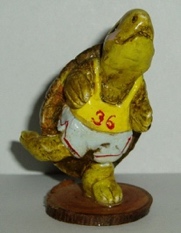
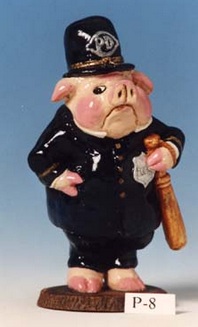
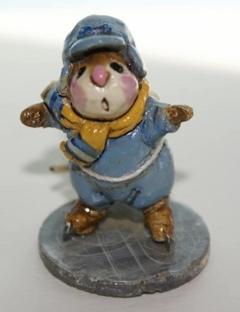
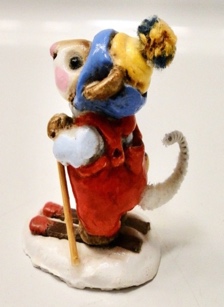
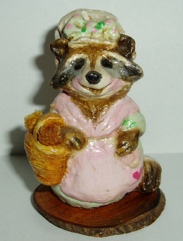
Annette and Willy also created a variety of animal sculptures other than mice. You can find Bears, Moles, Pigs, Raccoons, Rabbits, Frogs, Owls, and maybe even a jogging Turtle for sale on the secondary market. Like the mice, the animal sculptures are doing things: picking blueberries (probably one of Annette’s most famous pieces is the Blueberry Bears), drinking coffee (Frog Friends), bird watching (Bird Watcher Raccoon), skiing (Raccoon Skier), ice skating, (Old Skater Mouse), exercising (Turtle Jogger), keeping the peace (Piggy Policeman), getting married (Wedding Bunnies), splitting logs with an ax (Beaver Woodcutter), prepping a lecture (Professor Rabbit) and sitting with a grandchild (Grandpa Frog).
 |
 |
 |
 |
 |
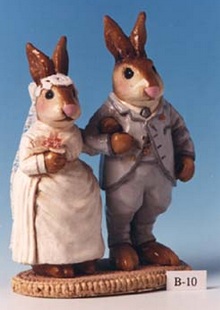 |
| Blueberry Bears | Turtle Jogger | Piggy Policeman | Skater Mouse | Old Skier Mouse | Wedding Bunnies |
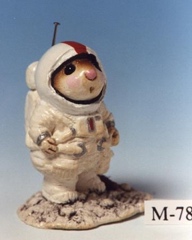
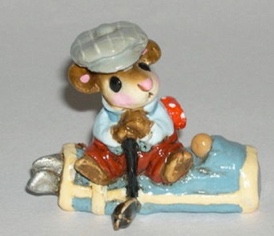
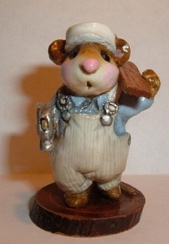
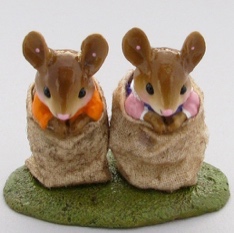
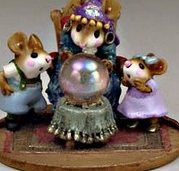
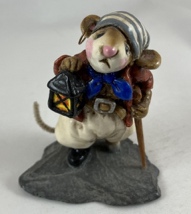
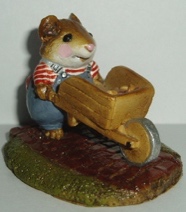
Annette (and later also Willy and Donna) cleverly incorporated everyday materials into her designs: a snap as the wheel for an old-fashioned sewing machine (Miss Bobbin), straight pins as an antenna for Moon Mouse, matches for skis and toothpick ski poles on Skier mice, a sunflower seed as the head of the golf club on the old Golfer Mouse and food for Picnic Mice, real seeds in the wheelbarrow for Harvest Mouse, real burlap fabric for the Sack Racers, twisted wire glasses on lots of faces, a marble crystal ball for a fortune teller, glass blobs as ice for the Skater mice, a wooden plank for Carpenter Mouse, and dried flowers in flower baskets are just a few of the ways the Annette incorporated everyday items into her mouse designs.
 |
 |
 |
 |
 |
 |
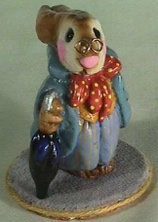 |
| straight pin | straw flowers | sunflower seed | wood plank | burlap sacks | marble ball | wire glasses |
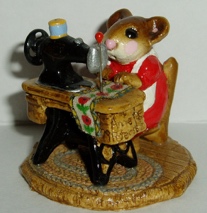 |
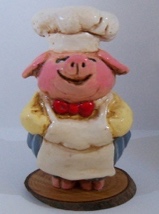 |
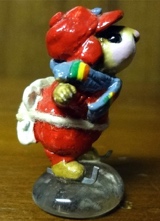 |
 |
 |
 |
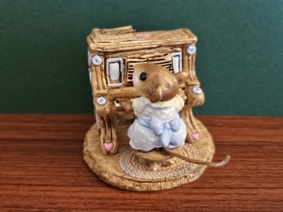 |
| pin, snap, real cloth | wood base | glass "ice" | slate base wood crutch | seeds | straw flower | paper sheet music |
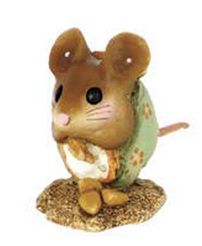
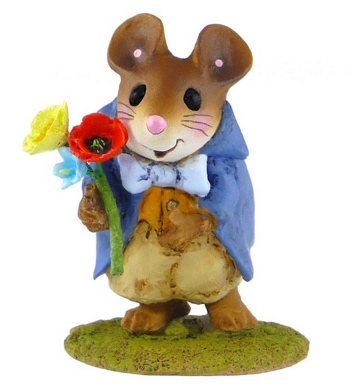
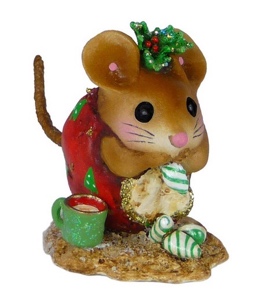
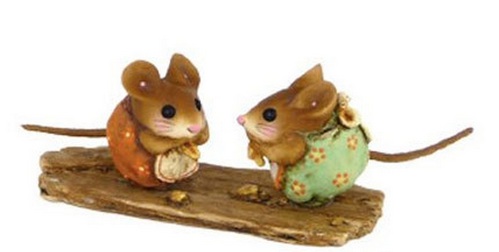
And Annette was always looking for ways to enhance the WFF line. Although they are retired you should be able to find examples of her adorable Nibble Mice on the secondary market. Sculpted to look like real mice wearing clothes, the Nibble Mice did not stay in the line very long; all were retired by 2021, having been available for less than a decade. Still, they provide a definite appeal for collectors who like varieties in their collections (like this author). Annette was never someone who kept doing the same thing over and over.
| Annette’s Nibble Mice | |||
 |
 |
 |
 |
Annette began her career as an artist and entrepreneur as a young woman and was still going to work almost every week and still sculpting, greeting collectors, and making new friends when she was 100 years old. She loved everything about the business she had built at a time when it was incredibly difficult for even highly motivated, determined, extraordinary women to start and build an enterprise that could still be going strong over 50 years later. And, under her guidance and leadership, the Wee Forest Folk company became an extraordinary example of a family-owned and family-run enterprise that was like home to other creative people who worked (and continue to work) there, some of them for decades.
Annette passed away three days short of her 103 rd birthday and she is sorely missed. Given her affection for Concord history, Annette was buried in one of the most historically significant final resting places in the country: Sleepy Hollow Cemetery in Concord, MA. And, although she is not in the red house in Carlisle, Massachusetts in person anymore, her presence is felt every day and her legacy continues in the work of her family members and the painters and finishers and fixers who are like family. It has been an honor and a privilege to know her and to be considered her friend.
Donna’s Sculptures
Donna Petersen got her start in the company while still at home as a helper for her Mom by painting WFF pieces and helping to train new painters in the Petersen family kitchen, where much of the creative work occurred. After graduation from college, Donna joined the Mouse Factory full time.
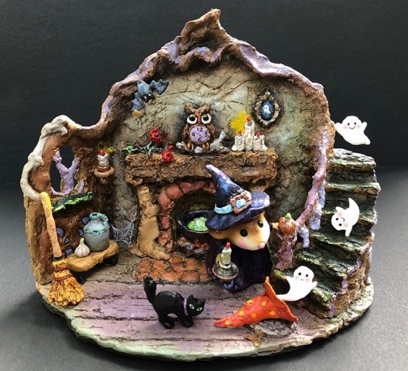
As a sculptor, Donna tends to work on a small, delicate, and often intricate scale, and she has a fondness for adding creatures like birds and bunnies and even turkeys to her sculptures, often making them the star of the piece. Pieces like The Yard Sale, Come Out and Play-It's Halloween! Coaxing Kitty with Kibble (and other "rooms" such as her furnished and unfurnished Christmas rooms), and Tea for Three demonstrate Donna’s ability to create very ornate, complex scenes that rely on careful design and sculpting work. Her sculpting technique is meticulous and she frequently accents her larger pieces by sculpting features both on the front side and on the back side of pieces. Those pieces are generally best displayed on shelves with mirror backing or on rotating pedestals like Annette’s elegant mice because every side adds to the story.
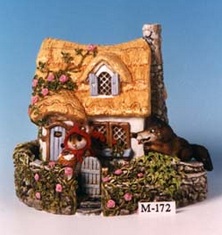
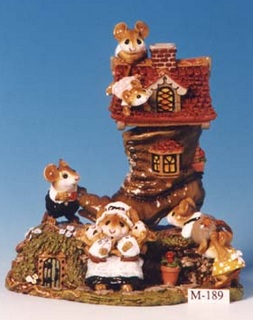
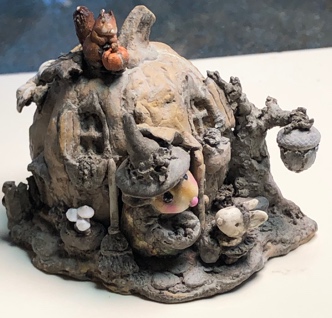
Some sculptures in Donna’s line of houses, cottages, and other dwellings feature miniature representations of favorite literary characters like an elaborately sculpted piece for the Mice Who Lived in a Shoe and an extraordinary house for Little Red Riding Hood and the Wolf. Her favorite season is Fall and her favorite holiday is Halloween. As a result, many of her WFF pieces have a Fall and/or Halloween theme. Her cottages made in the shape of fall gourds (such as Wee Pumpkin Bungalow) are unique in every way, while retaining total believability as dwellings for woodland creatures. She has also sculpted three detailed Halloween houses complete with trick-or-treaters at the door. She has created witches by the dozens and a list of mice dressed up as trick-or-treaters long enough to fill a high school auditorium. One of her outer-space creations (Greetings!) is available in 38 different color variations. And she is a major contributor to the long list of accessory pieces available in the WFF line.
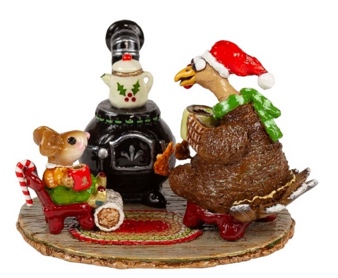
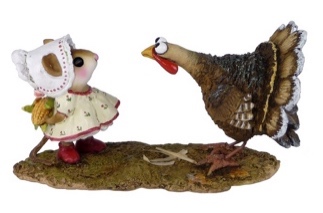
Donna is also a dedicated animal lover, conservationist, historian, and all-around caring person. More than a few of her pieces feature friendships between mouse figurines and animals. Wild turkeys hold special significance for her because she frequently watches them from her workroom window at home. Her friendly turkey trying to steal a corn snack from a mouse (Cob Gobbler), the turkey in a chef's hat offering home-baked pie to a mouse friend (Bon Appétit Mon Ami!), the turkey sharing Thanksgiving dinner with a Pilgrim (Turkey for Dinner!), and the Christmas turkey sitting sociably drinking hot chocolate with a small mouse friend while warming cold turkey feet in front of a potbellied stove (Toasty Turkey) all demonstrate Donna's love and deep appreciation for the nonhuman folk she encounters on her walks through the Concord woodlands, along the river that runs behind her property, as well as in her own backyard. Note, too, that many of her pieces feature an "old black stove", which is even sometimes painted in colors other than black. The stove in their farmhouse house in Concord obviously left memories and made an impression on her work.
 |
 |
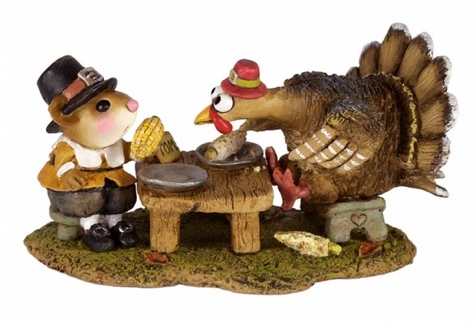 |
| Toasty Turkey | Cobb Gobbler | Turkey for Dinner! |
Donna also created the extremely popular Honk! series of small, seasonal/holiday-based cars. There are several cars being driven by Pilgrims with turkey passengers, of course. Those are the Honk! for Thanksgiving pieces. But there are also Honk! cars for other holidays: Easter, Valentine's day, Halloween, and Christmas, plus a Honk! for the USA.
Donna's love for the holidays is widely represented in her work. Her large series of Tea for Three pieces which feature a mouse having tea with a teddy bear and a Raggedy Ann doll (M-177) includes Easter, Valentine’s Day, 4th of July, Halloween, and Christmas. Several stores requested special Tea for Three pieces for events, and it has been made as an OAK several times. A similarly detailed piece, Bake Sale, has also been done for most, if not all, major holidays.
In the early 1980s, very early in her career, Donna sculptured a stand-alone series of teddy bear pieces, starting with TT-1 Tiny Teddy and continuing with a teddy sailor, drummer, child on a rocking horse and 9 more, all painted in two color choices.
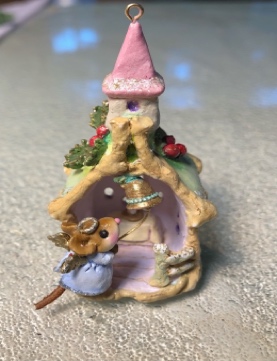
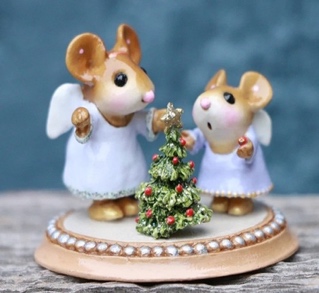
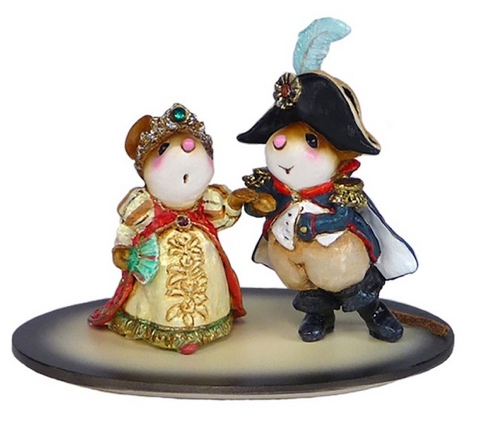
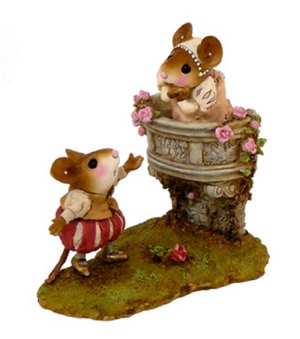
Donna has also sculpted many bunny pieces for Easter, church pieces for Christmas, a large number of sand/beach pieces, and many beautiful angels. Her love for history and culture is demonstrated in four pieces: Romeo and Juliet, Grand Opera’s Prima-Donna, Napoleon and Josephine, and The Patriot.
 |
 |
 |
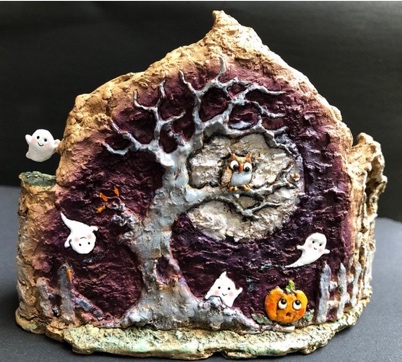 |
| Twig Church | Red Riding Hood | Come Out and Play….! House Inside | Come Out and Play….! Back Side Details |
 |
 |
 |
 |
 |
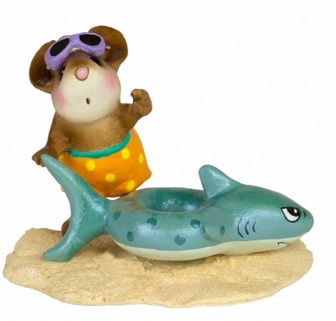
| Little Mice Who Lived in a Shoe | Wee Halloween Bungalow work in progress | Tiny Tubie Shark | Angels' Wee Tree | Tiny Teddy Boo Bear |
 |
 |
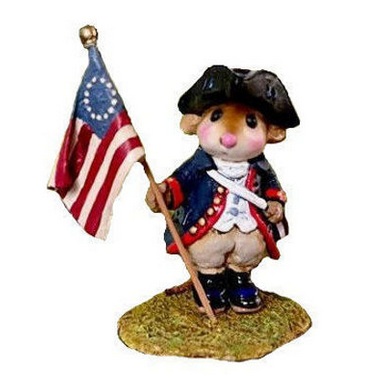 |
| Napoleon and Josephine | Romeo and Juliet | The Patriot |
Willy’s Sculptures
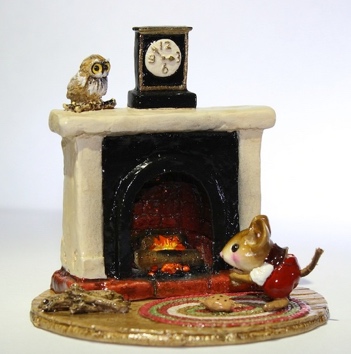
Many of Willy's early mice tend to be leaner and thinner than Annette’s with relatively thin fingers and toes. And they tend not to wear shoes. His early work included a variety of animals as well as mice and many, many vehicles. Some of his sculptures turned into mini collections on their own due to the wide variety of forms and colors (and sometimes inclusion of other accessories) created for those pieces: for example, Yummy, Mousey’s Bunny Slippers, and Fun Floats. Two of his early sculptures are still legendary today: Beauty and the Beast and Cave Mice. Willy made the Mantle Clock, the Egyptian chess board and pieces, and many "sets" of WFF pieces such as the Christmas tree ornaments, the Christmas trains, and A Stitch in Time.
Willy also designed several vehicles that have been a staple of the WFF line for many years. Pedal Pushers (M-270) come in many colors, as do the Pedal Planes (M-309) and Sunday Drivers (M-132). All three pieces have retired but they continue to be popular due, in part, to their wide distribution as store specials and event specials and the recent release of planes painted for the Chinese New Year. Many of Annette's and Donna's pieces suggest a story in motion but Willy’s pieces FLY. Willy has also sculpted tricycles, motorcycles, and boats and created a seasonal set of pickup trucks.
Mice sculpted more recently by Willy range from the incredibly detailed and elegant piece he sculpted to honor Brambly Hedge’s 40 th anniversary to tiny minis, which stand less than half an inch tall but exactly replicate the much larger versions of those mice. His original sculptures cover a broad range of scenes, topics, and WFF mouse characters for all four seasons and special events.
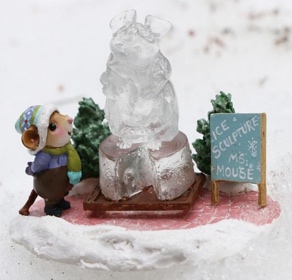
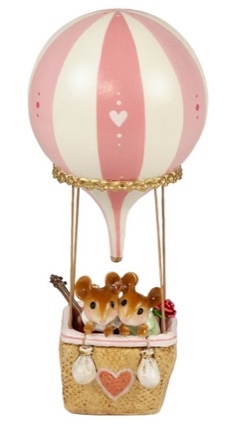
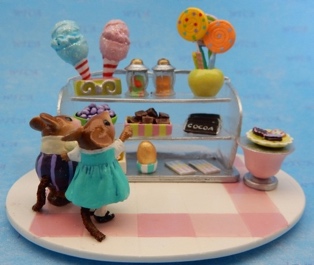
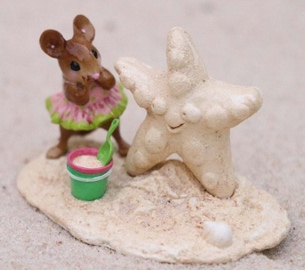
Willy has been the force behind using science and technology to develop innovative features for Wee Forest Folk production, beginning with a better process for airbrushing and "finishing" pieces. He has also developed ways to go beyond basic sculpting to create features for pieces that otherwise could not survive the molding and firing process. Consider, for example, pieces that feature water like the Pond Mice series and some of the Strolling through the Seasons pieces. It wasn't easy to figure out how to make sculpted pond water and beach waves appear natural and even "flowing" but somehow Willy prevailed. He also created "glass" display cases for two Mouse Expo pieces, realistic-looking ice sculptures (see, for example, Crystal Creation), inflatable beach toys, helium balloons, and even realistic-looking hot air balloons (e.g., American Aeronauts and Fly Away with Me!). Willy has also sculpted several snow globe pieces with liquid in the globe and snow that moves in the "water" when you shake it.
Clay works best as a medium when the piece being sculpted has significant mass concentrated in the base to support the elements on top. Cars and trucks and trains are well-supported by wheel systems under the vehicles. Snow mouse pieces are bigger on the bottom than on the top so they tend to be sturdy based on design. TOP-heavy pieces and pieces with mice in awkward positions need other types of support for the weight. And thin elements of sculptures such as legs and arms also need strength from within to lower the risk of breakage. For those pieces, Willy has become adept at using support wires embedded in the clay.
For a perfect example of Willy’s new designs that would not have been possible to make 20 years ago, go to the Wee Forest Folk website (www.weeforestfolk.com) and look carefully at the 12 Days of Christmas set, starting with a freehand sculpted Partridge in a Pear Tree standing on impossibly thin legs for the weight of that bird. Then we observe two turtle doves standing on a freehand-sculpted turtle. Again, the part of this piece holding the most weight (besides the decorative base) are four feet on thin legs. The French Hen is standing on one foot. The Calling Birds piece features a beautifully designed Mallard duck with two little feet standing on its back supporting a mouse. Now picture the 5 golden rings ringleader with a tiny hand holding a ring and a thin arm and hand holding a top hat over his head. Swans-a-Swimming is standing on a diving board. Ladies Dancing have wings suspended in the air and tiny dancing feet. Lords-A-Leaping features a ringleader holding a French horn while riding a fox with two long, thin legs that attach to the ground at roughly a 45-degree angle, causing most of the weight of the piece to be pushing down on those two small paws with the other two paws suspended in the air. Even a quick glance at the bagpipes on the Pipers Piping piece makes one wonder how such a piece could possibly survive being shipped. The Drummer looks more balanced than the other pieces but even he has one foot up. And how does one create a mold that can accommodate impossibly thin legs with wires running through them? This set is a feat of art and creativity combined with a twist: chemistry and engineering.
 |
 |
 |
 |
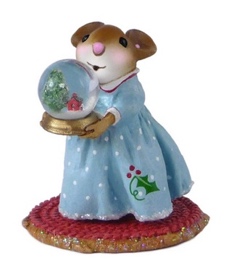 |
| ice sculpture | hot air balloon | glass display case | beach pieces | miniature snow globe |
While it's amazing Willy can create exact replicas of Wee Forest Folk pieces in miniature and the Forget Me Nots as almost exact replicas of Annette’s original work, his artistic talents do not end there. His drawing and painting skills are also extraordinary. He designed all of the beautiful WFF presentation boxes, painted the scenes for sets of WFF notecards/greeting cards as well as WFF accessories such as framed drawings and paintings, and has drawn sketches for collectors "on the spot" with ease.
His customization of a Breezing Along boat piece for a Folktoberfest charity auction is so excellent in every way that the piece he adorned with painted sails sold for $5000.
Willy's most recent sculpture (at the time of this writing, added to the line in 2026) called Sparky to the Rescue! features a fire engine so detailed and perfect in every way it is almost impossible to believe it was hand-sculpted. In fact, maybe someone with mystical powers created it by shrinking a real fire truck, just like the Fairy Godmother in Cinderella (a set created by Annette that is available as WFF pieces) turned the pumpkin into an elegant carriage. But this intricate sculpture is not going to revert back to clay at midnight.

Bonnie’s Sculptures
Bonnie has a variety of skill sets and interests unrelated to sculpting but nevertheless she has created a very impressive set of WFFs while still working with the WFF company in several other capacities.
She has sculpted bunnies engaging in a wide variety of human-type activities and has created both small-scale and large-scale pieces: for example, harvesting crops, throwing snowballs, ice skating, getting ready for Christmas, and caring for baby bunnies. And, of course, there are mice as well: doing yoga, celebrating Mother’s Day, and even drinking from a mug in a robe and slippers. She has made beach pieces, Halloween pieces, a chef, and mice in coffee cup costumes with very unusual names: Leprechaun Latte, Peppermint Mochamousie, and Frappamousie. Clearly Bonnie’s mice are very in tune with life in the 2020s.
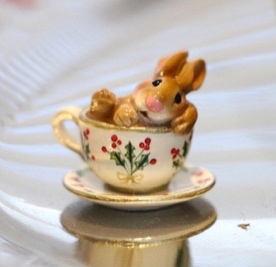
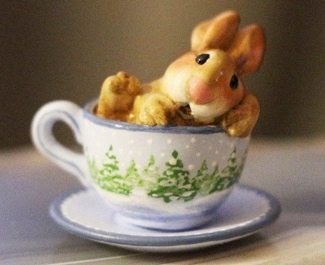
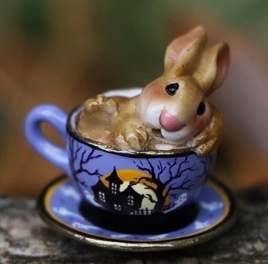
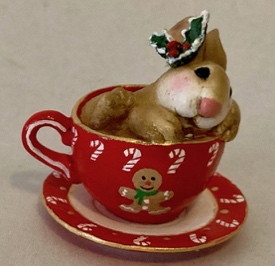
Bonnie’s series of teacup bunnies called Cuppa Cottontails have been extremely sought-after not only because bunnies look surprisingly cute sitting in teacups but also due to their extraordinary painted designs produced in very limited numbers. She sculpted We Dare You!, one of the pieces in the much sought-after Snowball Fight set, and contributed three pieces to the amazing Creative Hands Zoo and Garden store special set. She also sculpted a mouse in a beautifully decorated teacup.
 |
 |
 |
 |
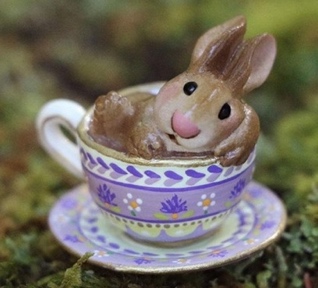 |
| Cuppa Cottontails in five decorated teacups (and there are many, many more of these pictured in the Master List) | ||||
Jenny’s Pieces and Her Role in the WFF business
Jenny Petersen runs the office and oversees the entire day-to-day WFF operation. She is the office manager, accountant, shipping supervisor, Willy’s Muse and confidant, special event planner, and a devoted grandma. She’s the person at the other end of the line when collectors call or email the factory with questions, suggestions, concerns, and sometimes just to connect with WFF employees. She’s part manager, part teacher, and part cheerleader and always available to help however she can. Her job does not have a set schedule and it’s not unusual to receive an email reply from her at late on a Sunday evening and even later on a weekday.
Jenny began her career with WFF as a painter before marrying the boss’s son, Willy. Together they raised two daughters, Annie (who does not work for WFF) and Bonnie (who does), and Willy and Jenny are also grandparents, which makes life even more interesting.
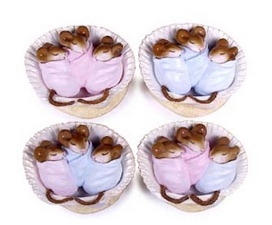
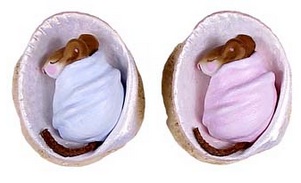
In spite of an incredibly busy schedule, Jenny also managed to sculpt several very adorable pieces for the line. Her Wee Sea Babies sleeping in half seashells (twins and triplets, boys and girls) set a quiet, serene tone, as does her Christmas piece, Christmas Cutie.
 |
 |
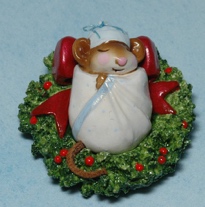 |
| Wee Sea Triplets | Wee Sea Babies | Christmas Cutie |
MAKING ART IN THE 21st CENTURY
Life in the 1970s was both more difficult in some ways and easier in other ways than life is in 2026 and, obviously, the WFF factory has had to adapt to changes.
Perhaps the first major change was the move from Annette’s house in Concord to the house in Carlisle. For many years Annette’s kitchen was the heart of WFF production, which is probably the reason a replica of her Old Black Stove appears numerous times in the Wee Forest Folk line: A piece by that name (The Old Black Stove) features Annette’s stove and has appeared in the line as store specials in a variety of colors other than black. Another version of Annette’s stove appears in the piece Miss Polly Mouse, a piece with multiple variations that harkens back to the 1980s. Halloween Surprise! by Donna (introduced in 2018) and, to a lesser extent, Donna’s Toasty Turkey in 2023 both feature stoves that resemble that old black stove. Another Donna piece features a red cast iron stove with a lady mouse in a white hat (Annette?) removing a tray of Valentine’s Day cookies while being supervised by a gray calico cat.
Annette's kitchen, an adjoining side room, and the living room served as a private museum to feature her work. Those rooms were casually decorated with early WFF pieces sitting on top of items on the counter in the kitchen, in the window sills, on the stove (which no longer was used for cooking), in the anteroom, and all over the living room. Rare pieces such as Nutsy Squirrel and Commo-Doremouse and other older treasures were within eyesight so Annette and her family could enjoy them every day.
Today's Mouse Factory is still a casual-looking space but there is more to see because the pieces are more complicated to make, there are more things to store, and more people need work areas to function in that space. There are WFF employees in the basement running the heavier, noisier equipment like the airbrushing set-up, and others in the rooms upstairs. But, as was true in Annette’s kitchen, space is tight. Every room contains shelves to store the items needed to work in those areas: shelves of paint colors, shelves of base examples, shelves of unfinished whiteware, shelves of current WFF pieces to ship, and so on. A curio for Annette made by Willy filled with many of those precious pieces from the farmhouse hangs on a wall.
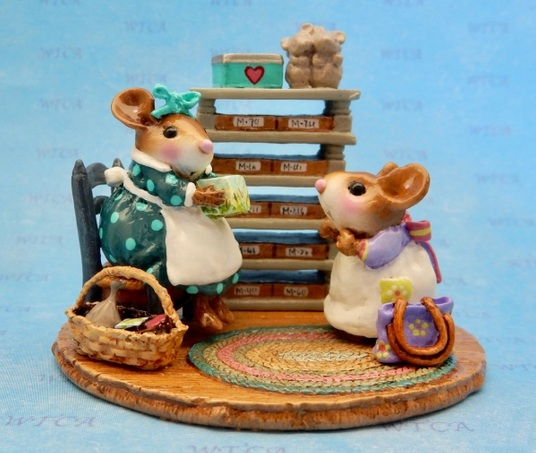
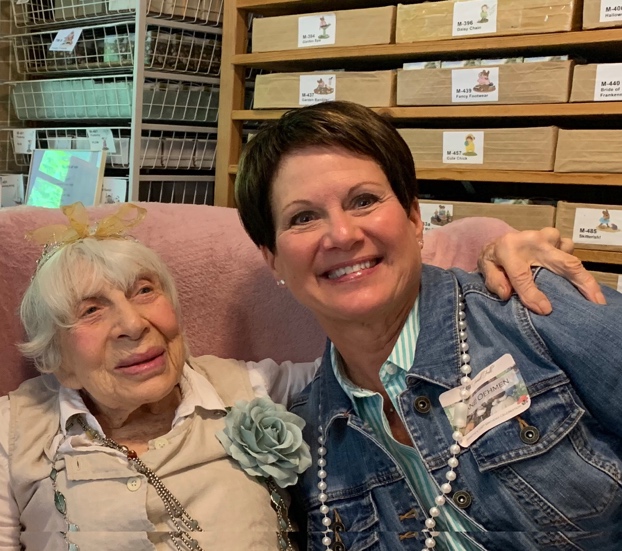
The WFF piece below, titled Mouse Mecca, features the same cardboard box drawer system that has been used to store finished, bagged WFF pieces for decades. Each box on the shelf contains one mouse that is identified on the front so everything is easy to find. Next to the photo of Mouse Mecca is a photo from Annette’s 100 th birthday party with Annette and a collector friend sitting in front of those same shelves in the Mouse Factory.
As "they" say, the more things change, the more they stay the same. Wee Forest Folk is still a cottage industry. There are no computer programs (other than those used for word processing) that dominate the scene. You'll find absolutely no trace of AI images. WFFs are not designed with CAD programs. They are still hand-drawn, hand-sculpted, hand-painted, hand-finished, hand-packed, hand-inventoried, and hand-shipped.
CONCLUSION
No twelve-page essay can do justice to, or even begin to explain/describe/illustrate, the workings of a company that has been thriving and evolving and growing for over 50 years. But, one of the most wonderful and amazing things about collecting Wee Forest Folk is having access to the people who actually do the creative work and keep the Mouse Factory running smoothly. As collectors, we’re not merely purchasing items online or from gift stores with little to no information about the artists behind those creations. We know quite a bit about the Petersens, the Mouse Factory, and Concord.
The Petersens have attended local events in person, made themselves available for phone calls, corresponded with collectors in a variety of ways, and generally allowed themselves to be known to their collectors. For many years the Mouse Factory hosted tours and collectors came from all over the country to take the tour. There is an entire section in the Master List that describes special WFF pieces that were gifted to those visitors as thank-you gifts for making the trip and being a collector. Although the Petersens did not regularly attend store events, Mouse Expo, the Fairy Tales event, or Folktoberfest they would frequently send representatives from the Factory to attend in their place. The biggest and best event was held in Carlisle at the Factory to celebrate Annette’s 100 th birthday. That birthday party was two-and-a-half days long and was attended by well over 100 Wee Forest Folk collectors from all over the country. Annette was there in person all three days to visit with those attendees and graciously allowed us to be photographed with her. It’s difficult to think of other artists these days who would do that without body guards and an entourage.
Hopefully, this essay provides a starting place for new collectors to delve more deeply into a collecting experience that has been a source of joy for Wee Forest Collectors from San Diego to San Francisco to Duluth to Boston to Miami to Singapore. And hopefully it serves as a reminder of all the fun we’ve had for those of us who have been collecting Wee Forest Folk for a long time.
Many lasting friendships have been built among WFF collectors over the years. And there are now "modern" ways of making and keeping WFF friends who may be thousands of miles away and keeping up with "what’s happening" in the WFF world.
For example, if you haven't used these resources so far, consider visiting the WFF website (www.weeforestfolk.com) and Official Wee Forest Folk Group Facebook page, the WFFCC website (www.weeforestfolkclub.org) and Facebook pages, the WFF Wee Trading Post on Facebook, the WFF Museum website (www.weeforestfolkmuseum.org), and the various store websites.
Being "connected" with other collectors can make collecting easier and even more enjoyable.